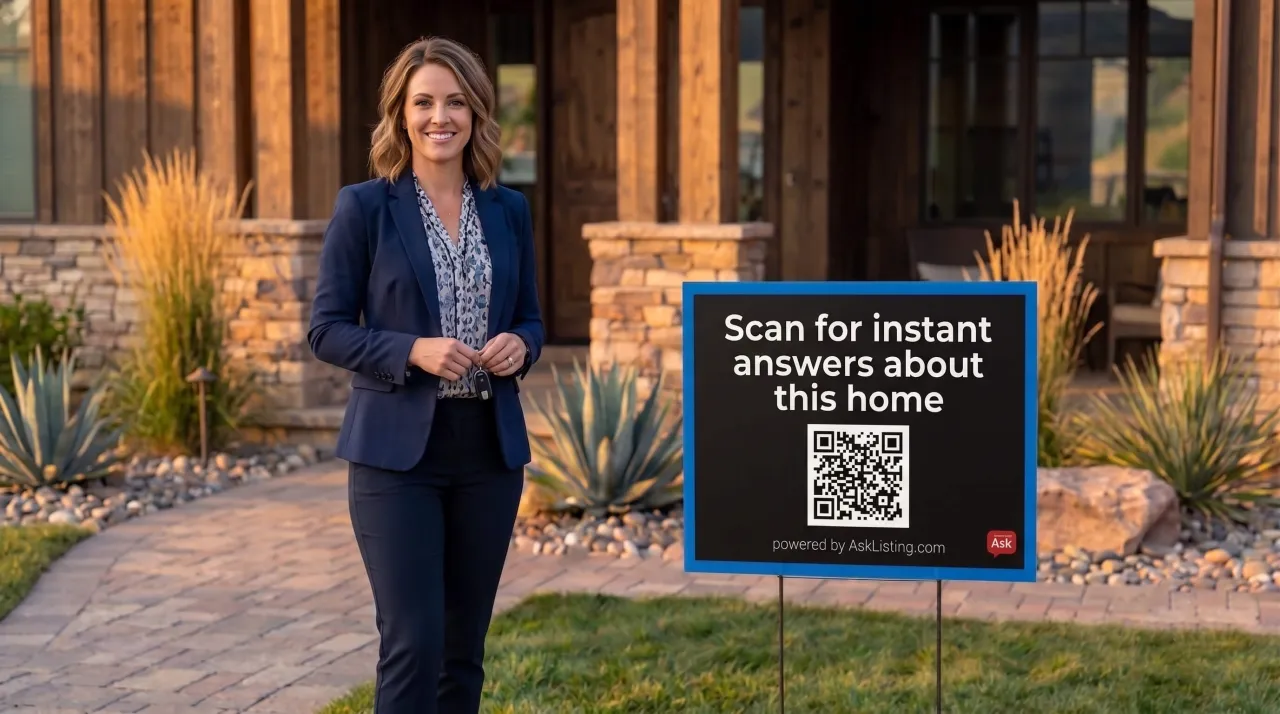
Why Most Real Estate Sign Riders Do Not Work
A buyer driving past your listing at 25 mph has roughly two seconds to read your sign before the property is behind them. In those two seconds, the average sign rider is asking them to memorize a ten-digit phone number, mentally note a web address, register your name and headshot, and then act on all of it later. None of that happens. The lead is gone before the car reaches the corner.
According to NAR buyer surveys, 78% of buyers drive by a listing before ever contacting an agent. That drive-by moment is the highest point of buying intent in the entire customer journey. The buyer is physically at the property, evaluating the neighborhood, imagining pulling into that driveway. They are more interested right now than they will be at any point before a showing. If your sign cannot capture that interest instantly, the moment evaporates.
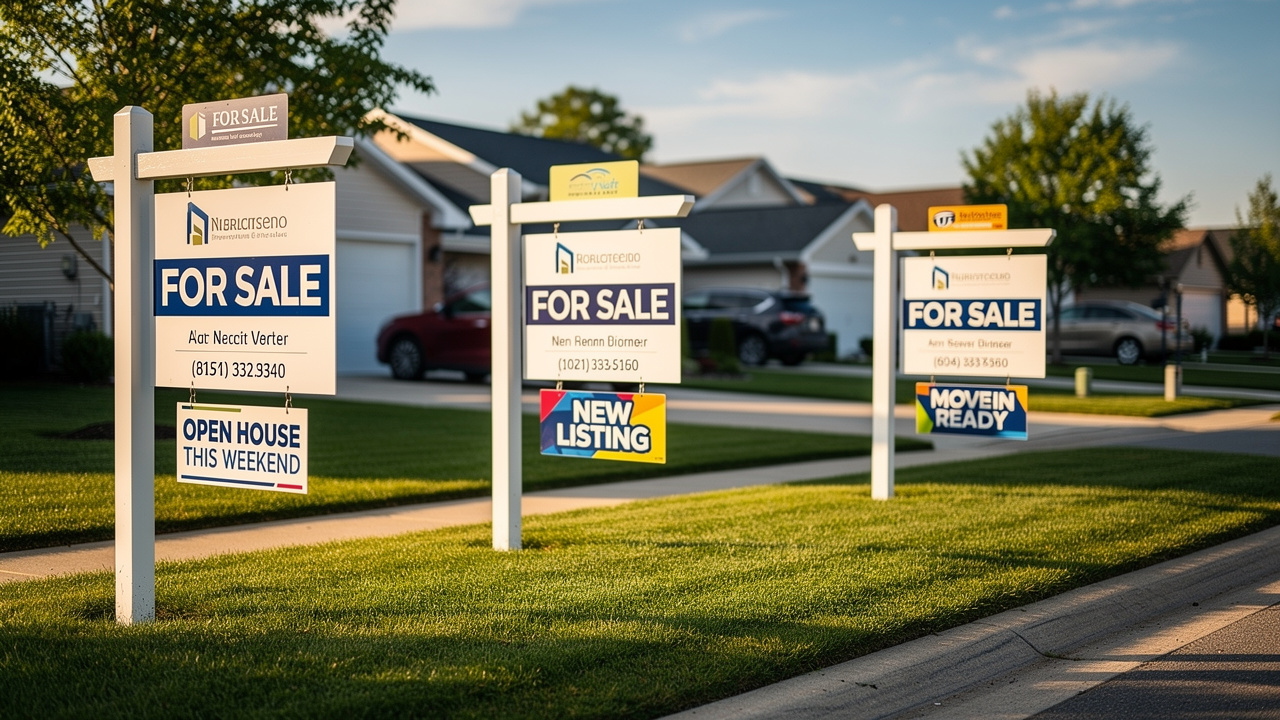
The typical phone-number-only rider treats this peak-interest moment like a passive billboard. It asks buyers to do real cognitive work: remember ten digits, dial a number when they get home, hope you pick up, and describe which property they saw. By the time they get home, they have driven past four other listings and browsed forty more on Zillow. The property they called about blurs with everything else. Most buyers never make that call at all.
The fix is a frictionless response mechanism: a QR code that opens listing details in one tap, or an SMS keyword that sends a text with one swipe. Both capture the lead at the moment of peak interest rather than hours later. Both give the agent a verified phone number and a timestamp. A phone number on a sign gives you nothing if it goes to voicemail.
7 Real Estate Sign Rider Ideas That Convert
-
QR to instant listing info Use a dynamic QR code that links to a mobile-optimized listing page or an AI-powered chat. The key word is dynamic: when the price drops or you add new photos, you update the destination URL without reprinting anything. Print the code at a minimum of 1.5 inches square and add five words of instruction below it: "Scan for photos and details."
-
Text-for-details SMS rider "Text HOME to [number] for photos" is one tap on any smartphone. The buyer's number is captured the moment the message sends, before you even respond. AskListing handles the auto-reply with full listing details and a qualifying question, so no manual follow-up is needed on your end.
-
Price reduction rider Use a contrasting background color and a headline like "JUST REDUCED" paired with a QR or SMS CTA. The combination of urgency and immediate access to the new price creates a compelling reason to act now. Price-reduction riders outperform generic "For Sale" riders because the message is news, not wallpaper.
-
Open house RSVP rider "Open Sunday 1-4pm. Scan to RSVP." A simple QR that opens a registration form captures pre-registrations before the event, giving you a contact list of warm buyers before anyone rings the doorbell. Pre-registered guests also show higher intent than walk-ins who happened to see a sign that morning.
-
Virtual tour rider A QR that links directly to a 3D walkthrough or video tour is particularly powerful for out-of-town buyers and buyers with tight schedules who cannot attend a showing immediately. It keeps them engaged with the property when an in-person visit is not yet possible, and it gives you time to warm the lead before you ever speak.
-
Neighborhood stats rider "Scan for school ratings, sold comps, and market trends." This rider positions you as a local market expert rather than just the seller's representative. Buyers researching a neighborhood are often still deciding between areas, and giving them data at the point of discovery nudges them toward this one.
-
Multi-listing rider for teams Agents with multiple active listings can use a single phone number on every sign. When a buyer texts in, an AI assistant asks for the address and pulls up the right listing automatically. Consistent branding across all signs, no separate numbers to manage, and every lead flows into one dashboard.
QR vs. Phone Number: Why the Gap Is Getting Wider
That drive-by pool represents an enormous, largely untapped source of leads, and the gap that swallows most of it is timing. The average agent takes 15 hours or more to respond to a web inquiry. A buyer who drives by, gets home, and opens Zillow instead of calling has usually moved on well before that response ever arrives. By the time they remember they wanted to call, they are already comparing five other listings and the moment has passed.
A QR code or text-for-info shortcode closes that gap by capturing the lead at the moment of interest, not hours later. A buyer who scans your code at 10am is in your system by 10:01am, before they have had a chance to forget you. Text-for-info performs at 3x the response rate of phone-number-only signs in part because the friction is so much lower: one tap versus ten digits dialed in traffic. The other reason is timing. A text goes through instantly. A call to your number might go to voicemail, and voicemails go unreturned at a troublingly high rate.
There is also a data quality difference that compounds over time. Every QR scan and every text creates a verifiable record: a phone number, a timestamp, and the specific listing that triggered the contact. A voicemail left on your number gives you a name if you are lucky and a callback number that may or may not work. The QR and SMS paths build a CRM entry automatically. The phone-only path builds nothing unless you happen to answer and remember to log it. For agents managing multiple listings, that advantage grows with every sign you put out.
The sign is not a billboard. It is the first message in a conversation. Design it like one: give the buyer something to respond to, and have an AI ready to reply in under a minute.
How Text-for-Info SMS Riders Work
The mechanics are simple. A buyer sees your sign rider, which says something like "Text HOME to 555-0192 for photos and details." They tap their messages app, type HOME, and hit send. Within 60 seconds, they receive an automated reply with the listing price, bedroom and bathroom count, square footage, a link to the photo gallery, and one qualifying question: "Are you currently working with a buyer's agent?" That question is deliberate. The answer tells you immediately how to follow up.
From there, the AI assistant continues the conversation. If the buyer says no, they are not working with an agent, the system flags the conversation as a high-priority lead and alerts you within seconds. If they say yes, the system still captures the contact and notes the agent relationship, which is useful for future marketing and for tracking buyer interest without stepping on a colleague's relationship. Either way, you have a verified phone number, a timestamp, and a full conversation log before you have ever spoken to this person.
The speed advantage here is significant. Industry data consistently shows that the average agent responds to a web inquiry in 15 hours or more. An AI texting assistant responds in under 60 seconds, every time, including at 2am on a Sunday when a buyer who just finished an evening drive-by sends a text. That immediacy changes the buyer's experience of your brand before you have had a single conversation. By the time you call them the next morning, they already have listing details, they have had a few questions answered, and they remember you as the agent who got back to them right away.
On the compliance side: when a buyer texts your shortcode, they are providing express written consent to receive SMS communications from you, satisfying TCPA requirements. For ready-to-use message templates and follow-up sequences, see our real estate text message scripts guide. No paper opt-in forms, no awkward verbal consent requests at the door. The text message is both the opt-in and the first message in the nurture sequence, handled automatically by AskListing.
AskListing puts an AI texting assistant on every property. Buyers scan or text, you get the lead. Setup takes under 5 minutes.
Design Tips for Sign Riders That Actually Get Scanned
Size matters more than most agents realize. A QR code needs to be at least 1.5 inches square to scan reliably from 10 feet, which is a typical drive-by distance. If you can go to 2 inches, do it. Outdoors, signs get dirty, angled in sunlight, and partially obscured by vegetation or other signs, all of which degrade scan reliability. Use error-correction level Q or H (not L or M) when generating the code: higher error correction means the code still works even if 25 to 30% of the pattern is obscured or damaged. Most QR generator tools offer this as a dropdown option.
Color and contrast are equally critical. The QR module pattern should be dark on a light background, or light on a very dark background, with a strong contrast ratio. Do not use your brand colors as the QR pattern itself unless you have verified the contrast is sufficient. A good rule: if you would not print black text on that background color, do not print a QR code on it either. Maintain a quiet zone, meaning a clear border of white space, of at least 30% of the code's width on all four sides. Without that quiet zone, scanners have trouble finding the pattern's edges and scan rates drop sharply.
The most common design mistake is trying to put too much on one rider. A QR code does one job. An SMS shortcode does one job. When you add your phone number, your website, your social handles, and your headshot to the same rider, every element competes for two seconds of attention and nothing wins. Riders that carry a single CTA, with five words of instruction maximum, outperform cluttered riders by a wide margin in both scan rate and lead conversion. One element, one action.
Build the Full System: From Sign to Conversation
The sign rider is the entry point, not the destination. What you build behind it determines whether a scan or a text becomes a showing, and whether a showing becomes a sale. The rider captures intent. The system converts it. If a buyer scans your QR code and lands on a slow, desktop-formatted listing page with no clear next step, that lead is already cooling. If they scan and land on a mobile page with photos loading in under two seconds, a price summary, and a prompt to ask questions, the conversation has started on your terms.
The same principle applies to SMS riders. The auto-response has to be fast (under 60 seconds), substantive (actual listing details, not "thanks for texting, an agent will call you"), and conversational. Buyers who get a helpful response immediately are far more likely to reply and continue the exchange. Those who get a form-letter acknowledgment close the thread and move on. Every agent thinks their follow-up is fast. An AI assistant is faster than every agent, always, without exception or bad days or missed notifications.
Once the system is running, you get a dashboard of every lead, every conversation, and every lead score, sorted by engagement level. You spend your calling time on buyers who have already demonstrated interest by asking questions and replying to follow-ups, not cold-dialing every voicemail that came in over the weekend. For a deeper look at the technical setup for QR codes, the QR code setup guide covers code generation, dynamic redirects, and printing specifications. For the full strategy, see how to use real estate signs to generate leads. The guides together cover the full sign-to-system workflow that turns a $25 rider into a lead pipeline.
Reader Questions
The most effective real estate sign riders include one clear call-to-action: either a QR code with a five-word instruction ("Scan for photos and floor plan") or a text-for-info shortcode ("Text HOME to 555-0192"). Avoid putting your phone number, website, headshot, and slogan all at once. A buyer driving past at 25 mph has about two seconds to process your sign. Give them one action.
At least 1.5 inches square for reliable scanning from 10 feet, which covers most drive-by distances. If you can size it to 2 inches or more, do it. Use a high error-correction level (Q or H in most QR generators) so the code still scans even if the sign gets slightly weathered or dirty.
Yes. A sign rider costs $15 to $40. A single showing converted to a sale returns that investment many times over. The more important question is whether your rider has a trackable, frictionless call-to-action. A phone-number-only rider is nearly impossible to measure and produces far fewer leads than a QR or SMS rider.