Open House Lead Capture Ideas That Actually Work in 2026
Open House|11 min read|June 23, 2026
Quick answers
Why do sign-in sheets fail?
30-40% of handwritten names and phone numbers at open houses are unreadable or intentionally fake. Visitors who are not serious fill in nonsense; serious buyers often skip it entirely because of privacy concerns.
Best digital alternative to sign-in sheets
A QR code station at the entrance that opens an AI texting assistant. Buyers scan with their phone, which captures a real, verified phone number as a new SMS lead. No handwriting required.
How do I capture leads at an open house without a sign-in sheet?
Place a QR code at the door that links to an AI chat or SMS shortcode. When buyers scan or text, their verified phone number is captured automatically. You end the open house with a contact list you can actually use.
What should I do with open house leads after the event?
Follow up within 24 hours by text. Reference something specific from their visit if you can. AI tools can send automated post-event follow-ups to every visitor at once, then alert you when someone responds.
Chapter 01
Why Most Open House Lead Capture Does Not Work
40%
of open house sign-in sheet entries contain fake or unreadable contact information
Real estate agent surveys, NAR
The sign-in sheet has been a fixture at open houses for decades, and it does not work. Not in the way agents hope. The fundamental problem is the setup: you hand a clipboard to a stranger, ask for their name and phone number, and then trust that they will give you real information. Most will not, and the ones who would rather not be cold-called have every reason to write something plausible-sounding and walk past you into the kitchen.
The first failure is fake data. Surveys of real estate agents consistently show that 30 to 40 percent of open house sign-in sheet entries contain either fake phone numbers, fake names, or handwriting so poor that the information cannot be transcribed. Neighbors who are curious about the listing price but have no intention of buying will fill in their name out of politeness and invent a number. Lookers who are years away from buying anything will do the same. The data problem is structural: the sheet captures everyone who walked in, without any signal about who is actually a buyer.
The second failure is legibility. Even among legitimate contacts, handwritten phone numbers are notoriously error-prone. A seven and a one look identical under stress. A six and an eight blend. Agents regularly transpose digits when transcribing, and there is no way to know you have the wrong number until a call fails. The agent follows up with someone who never existed, while the real buyer answers no calls because the agent is dialing a number three digits off from the right one.
The third failure is timing. A paper sign-in sheet requires manual transcription into a CRM or phone contacts before any follow-up can happen. That process rarely happens at the event itself. It happens Sunday night, if the agent is disciplined, or Monday morning, if they are not. By then, the buyer has toured two more properties. They may have already made an offer. The 24 to 48 hour window after an open house visit is the most critical time to engage a buyer, and the sign-in sheet systematically burns it.
Chapter 02
QR Code Station at the Door: The Core Open House Lead Capture Fix
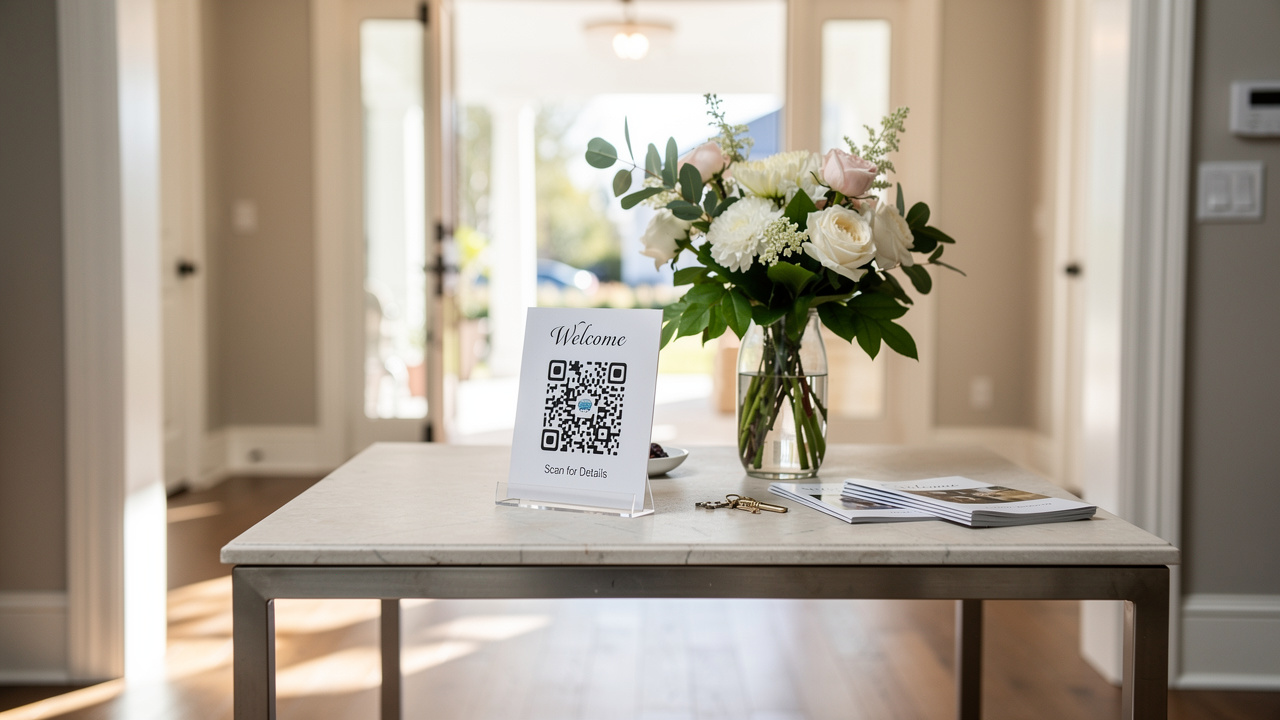
A QR station at the entrance replaces the sign-in sheet and captures verified contact information
The most effective replacement for a sign-in sheet is a QR code station at the entrance. The setup is minimal: a printed card or small tabletop sign with a scannable QR code and a single line of instruction ("Scan for property details and your disclosure packet"). When buyers arrive, they scan with their own phone. That action initiates a text conversation with the AI assistant behind the code. Their real phone number is captured the moment they send their first message, before they have said anything beyond hello.
The critical difference from a shared tablet or paper form is that buyers use their own device. They are not handing their information to a stranger. They are choosing to text a number, the same way they might text a business for hours or product info. That opt-in dynamic matters both legally, from a consent standpoint, and psychologically. Buyers who would never write their real number on a clipboard will text in without hesitation because they are in control of the exchange. The number that arrives in the agent dashboard is the actual number tied to that person's phone account. It is verified by default.
The AI handles the initial conversation automatically. It can answer questions about the property, send the floor plan or disclosure documents, and collect basic context ("Are you currently working with an agent?" "Have you seen other properties in this price range?") before the agent walks over. By the time the agent greets the visitor, they already have a name, a phone number, and some context about their buying situation in their dashboard. The open house becomes a confirmation step in a relationship that has already started, rather than a cold introduction.
Privacy is also a genuine concern worth addressing directly. Many buyers are reluctant to sign in at open houses precisely because they do not want to be added to cold call lists. The QR approach does not eliminate that concern entirely, but it shifts the dynamic. The buyer initiates the contact. They scan and text because they want something: the disclosure packet, the floor plan, the price history. The exchange feels like getting information, not surrendering personal data. Anecdotally, agents who switch from clipboards to QR stations report that significantly more visitors engage at the door rather than walking past the sign-in table without stopping.
Chapter 03
Text-to-Win and Text-for-Info Incentives
Open house lead capture improves dramatically when the buyer receives something tangible in return for texting in. The mechanism is simple: give people a reason to engage that is not "so we can follow up with you." That reason should be immediate and specific to the property they are already standing in.
"Text OPEN to [number] for the seller's full disclosure packet" works because the buyer has a real use for the disclosure. They are standing in the house. They want to know about the roof, the HVAC age, the plumbing repairs. The AI sends the document link immediately, within seconds of the first text, and captures the lead in the same exchange. There is no delay, no "we'll send that to you later," no friction. The buyer gets what they asked for, and the agent gets a verified contact with a documented expression of interest in the property. Variations include the floor plan, the inspection report (if available and the seller consents), utility cost averages, HOA rules, or renovation permit history. Each of these is information a serious buyer would want. Each is a legitimate reason to text in.
"Text-to-win" variations (a raffle for a home buying consultation, a gift card for local businesses, or a neighborhood restaurant guide) also work, but they are more complex to administer and carry a different signal. A buyer who texts in for the disclosure packet is interested in this specific property. A buyer who texts in for a gift card raffle might be interested in winning a gift card. The text-for-info approach generates buyer intent signals alongside the contact capture, which makes the resulting lead list meaningfully more valuable. That said, in a slow market or on a listing with low foot traffic, any incentive that converts passersby into identifiable contacts is better than an empty sign-in sheet.
An open house without a digital lead capture system is a marketing event with no measurable ROI. Every visitor should leave a verifiable trace.
Chapter 04
Pre-Registration QR on Marketing Materials
The lead capture opportunity begins before anyone sets foot in the property. Every piece of marketing materials that promotes the open house can carry a QR code for pre-registration: the listing flyer, the social media post, the email blast to the agent's database, the just-listed postcard. The instruction is straightforward: "Register for Sunday's Open House. Scan to reserve your spot." Pre-registration frames the event as something worth planning for rather than something to drop into on a whim, which tends to attract buyers who are further along in their search.
Pre-registration gives the agent a contact list before anyone arrives. The AI can send a confirmation text immediately after registration, then a reminder the morning of the event: "Your open house at 4212 Maple Street is today at 1 pm. The disclosure packet and floor plan are attached. See you there." That second touch keeps the property top of mind and the appointment concrete. Buyers who registered and received two texts before the event are considerably more likely to show up than buyers who bookmarked the listing and vaguely planned to drop by.
The pre-registered buyer arrives already engaged. The agent can prepare for the visit: reviewing what the buyer asked about during pre-registration, noting whether they said they are pre-approved, whether they have a timeline. The open house interaction becomes a conversation between two people who are already acquainted rather than a stranger walking through the door. From a lead quality standpoint, pre-registered buyers represent the top tier of open house traffic, and the pre-registration QR is what separates them from the general walk-in pool.
Chapter 05
Room-by-Room QR Codes
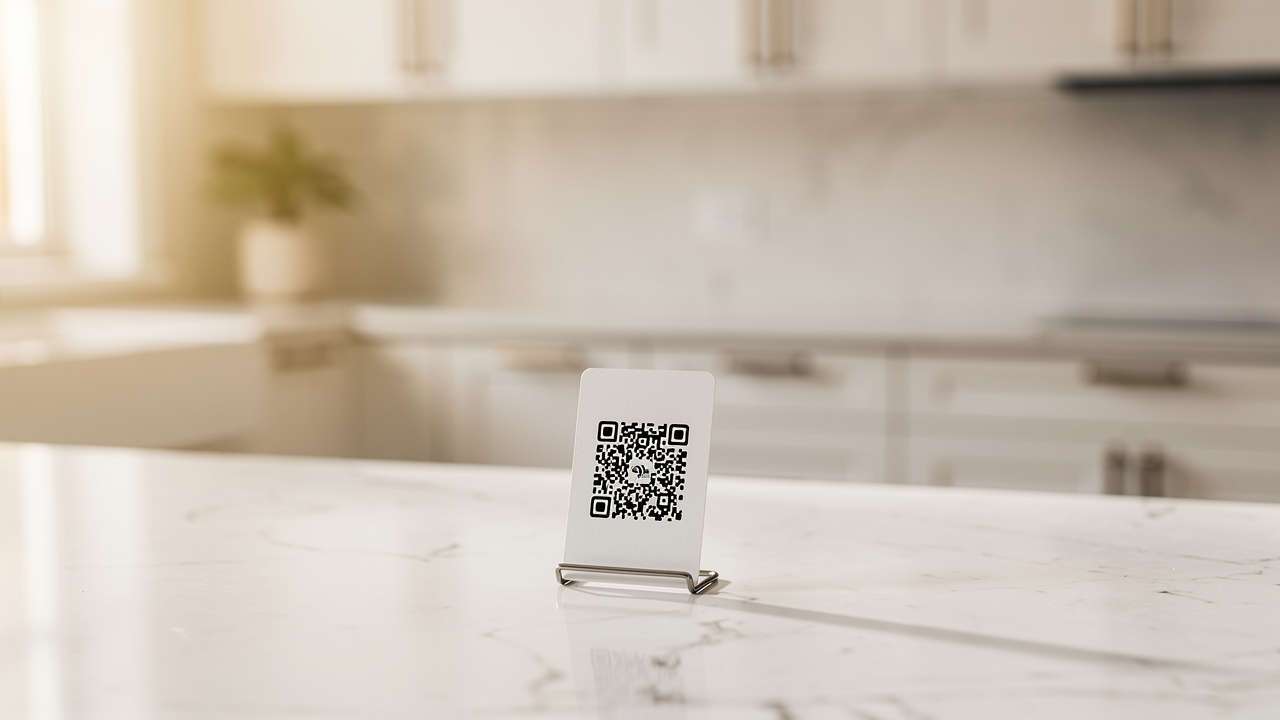
The QR approach scales beyond the entrance. Small cards placed in each room, linked to room-specific information, serve two purposes at once: they give buyers useful data exactly when they want it, and they generate interest signals the agent can use in follow-up conversations. A card in the kitchen links to appliance specifications, the renovation timeline, and the brand of the cabinetry. A card in the primary bath links to permit history and HOA renovation rules. A card in the back yard links to utility cost averages, irrigation system specs, and neighborhood noise data if available.
Buyers self-serve the information they care about, and that behavior is revealing. A buyer who scanned the kitchen card twice and the back yard card once is probably prioritizing cooking space and outdoor living. A buyer who scanned the permit history card and nothing else is probably focused on risk. A buyer who scanned every card in sequence is thorough, likely experienced, and probably serious. This engagement data flows into the agent's dashboard alongside contact information, giving the agent context for a follow-up conversation that a sign-in sheet could never provide. Instead of calling a name from a list, the agent can reference what the buyer actually looked at: "I noticed you spent some time in the kitchen. Were you curious about the countertops or more about the renovation timeline?"
For a deeper look at how an AI assistant handles multi-topic buyer conversations across different property features, the real estate chatbot guide covers the conversation design in detail. The key principle is the same: the AI captures interest, provides information, and routes engaged buyers to the agent without requiring the agent to be present for every exchange.
Chapter 06
Automated Post-Open-House Follow-Up
The follow-up window is the most squandered asset in open house marketing. Buyers are in active search mode on the day of the event. They are comparing properties, forming opinions, and narrowing their list. The agent who reaches them that afternoon or evening is competing against two or three other properties the buyer visited the same day. By the next morning, the mental rankings are set. By the next evening, some buyers have already made offers. The 2-hour follow-up window is not a preference; it is a constraint imposed by how buyers actually behave.
Automated SMS follow-up solves the timing problem without adding to agent workload. Every visitor who scanned or texted in receives an automated message within two hours of the event's end: "Thanks for stopping by 4212 Maple Street today. Happy to answer any questions, or I can set up a private showing if you'd like another look. Just reply here." The AI handles the replies. Buyers who say yes, or who ask a question, move into an appointment flow or a conversation that the agent monitors and joins when appropriate. Buyers who do not reply are logged as cool leads with a note to follow up again in three to five days. The agent reviews only the conversations that produced a warm signal, which is typically a manageable number even after a busy event.
The personalization floor matters here. A generic "thanks for coming" text is better than silence but not by much. The best automated follow-ups reference the property specifically, include a direct offer to answer questions or book a showing, and come from the agent's actual number (or a number the agent owns, not a masked shortcode). Buyers who remember the house remember it at a sensory level: the kitchen, the light, the yard. A follow-up that names the property and makes a specific next-step offer connects to that memory. A generic "great to meet you" does not. The SMS marketing guide covers follow-up message construction in detail, including the templates that generate the highest reply rates.
Chapter 07
Building the Complete Open House Lead System
Each of the five approaches above works independently. Combined, they form a system that captures buyers at every stage of engagement: the committed pre-registrant, the walk-in who wants the disclosure, the curious neighbor who scanned the kitchen card, and the quiet buyer who toured the whole house without saying much. The layered approach means the agent is not relying on any single touchpoint to catch every lead. The pre-registration QR catches the planners. The door station catches the walk-ins. The text-for-info incentive catches the hesitant. The room-by-room cards catch the detail-oriented. The automated follow-up activates all of them within the window that matters.
The compound effect is significant. An agent running all five of these systems at a single open house will typically generate more actionable leads from fewer total visitors than an agent with a clipboard and a sign-in sheet at a busier event. The sign-in sheet captures everyone who walked in, minus the people who skipped it, minus the people who gave fake information, minus the numbers that are illegible. The QR system captures only the people who chose to engage, but those people have provided real, verified contact information, expressed some level of interest in the property, and consented to receive follow-up communication. Lead quality and lead quantity are both higher.
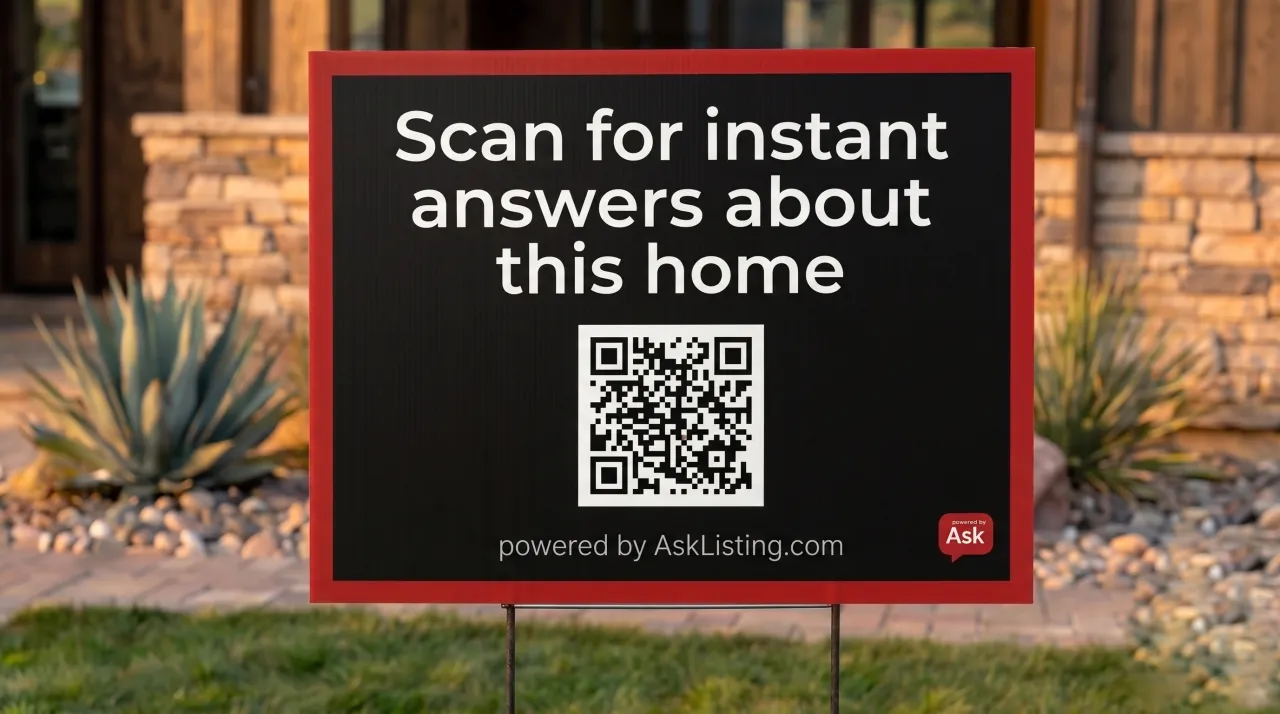
For agents building this system, the logical starting point is the door station: one QR code, one sign, one AI number. That alone replaces the sign-in sheet and eliminates the fake data and transcription problems. Pre-registration and room-by-room cards layer on top of that foundation as the agent becomes comfortable with the workflow. For the full picture on how QR codes work on property signs and marketing materials more broadly, the QR code sign setup guide covers physical placement, code sizing, and dynamic URL management. For sign rider ideas that drive traffic to the open house in the first place, that guide covers the formats that generate the most pre-event engagement. The complete system starts at the sign and ends with an appointment, with every step automated and measurable.
Turn every visitor into a verified lead
AskListing's QR-to-SMS system captures verifiable phone numbers at your open house automatically. No sign-in sheet, no fake data.
Replace your sign-in sheet with a QR code station at the entrance that links to an AI texting assistant. When buyers scan, their real phone number is captured as a consented lead. Follow with automated SMS outreach within 2 hours of the event and a personal follow-up text from the agent within 24 hours. The combination of immediate contact capture and fast follow-up puts you ahead of every agent who is still transcribing a paper list on Sunday night.
Q. What is the best open house app for lead capture?
The best open house lead capture tools capture verified contact information without requiring visitors to fill in a form. QR-to-SMS systems like AskListing work because buyers use their own phones. The number that shows up in your dashboard is real and verified, tied to an actual device and account. Apps that require visitors to type their info on a shared tablet have the same problem as paper sign-in sheets: people enter fake data. The shared-device model also raises hygiene concerns in a world where people are reluctant to touch communal surfaces, which reduces scan rates further.
Q. How do you follow up with open house leads?
Follow up by text within 2 hours while the visit is still fresh. Reference something specific: "Thanks for stopping by 4212 Maple Street today. The kitchen was a highlight for a lot of visitors. Any questions I can answer?" Personalization dramatically increases response rates compared to generic follow-ups. AI tools can send a first-touch text automatically to every visitor the moment the event ends, then alert you when someone replies. You only spend personal time on leads who engage, which keeps the post-event workload manageable even after a high-traffic Sunday.
About this guide
This is Field Guide No. 005 in the AskListing series on real estate lead capture, sign strategy, and AI tools for agents.
Last updated June 23, 2026.
Open HouseLead CaptureQR CodesSMS Follow-UpReal Estate AI