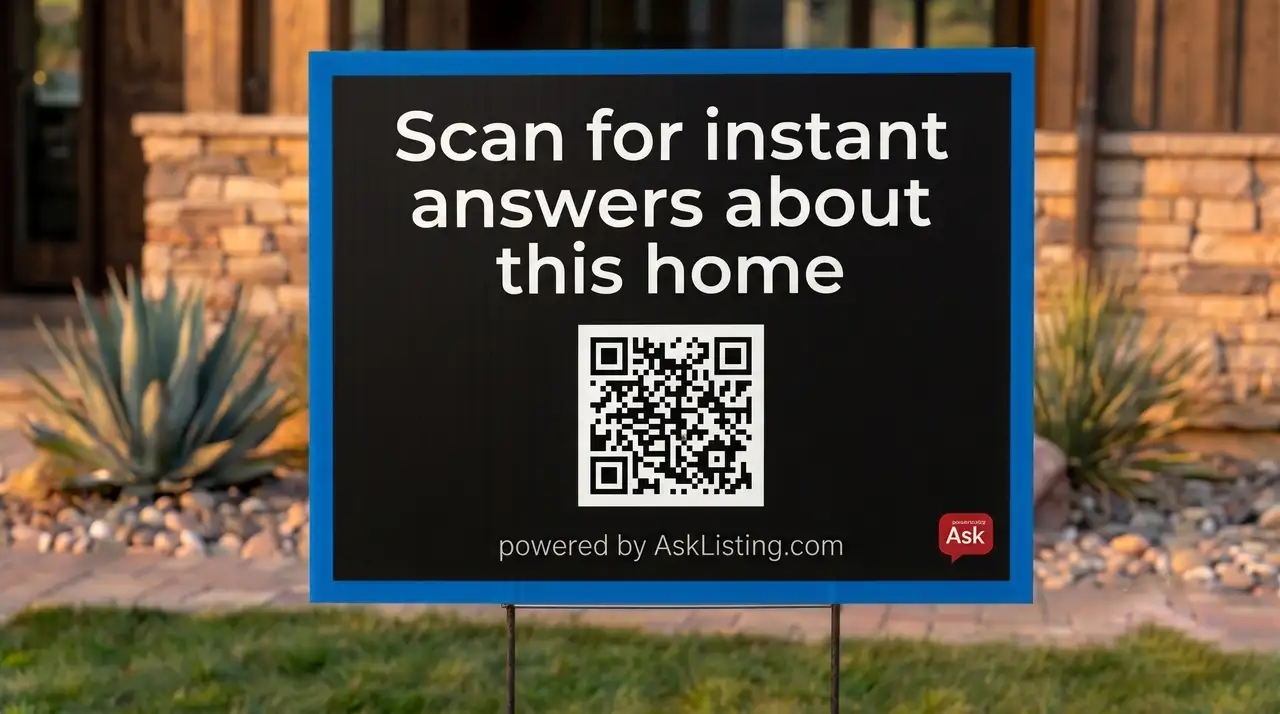
A yard sign is your cheapest source of drive-by interest, and your leakiest. Add a QR code and AI, and every passerby can scan the sign, get an instant answer, and become a qualified lead, day or night, while the sign just stands there working.
A standard real estate sign shows a phone number and hopes. A smart sign answers. Add a QR code linked to the listing's AI, and the sign turns interest into a captured, qualified lead before the buyer drives away.
A buyer drives or walks by, likes the house, and wants to know the price, the beds, and whether it is still available. Right now.
They scan the QR code on the sign or rider with their phone camera. A text or web chat opens instantly. No call, no app, no form.
The AI answers from your approved facts, then captures contact, timeline, budget, and pre-approval, scoring the lead as it goes.
You get a text and email with the transcript and lead score, and showings book straight to your calendar. The sign never sleeps.
What the signs are, the sizes you actually use, where you can put them, and the one upgrade that turns a sign from a billboard into a lead source.
Most agents use a handful of sign formats, and each does a different job:
You do not need a catalog, just the common sizes:
A QR code reads reliably from a few feet away when it is at least about 1.5 inches square, so a rider or a panel corner is plenty of room. Bigger is better for a drive-by scan.
Visibility wins, but signs are regulated. Three things to check before you stake:
Here is the gap. A traditional sign gives a buyer a phone number and asks them to call a stranger and wait for a callback. Most will not. They will scan the next listing instead. A real estate QR code on the sign closes that gap: the buyer scans, an AI answers their questions instantly from your approved facts, and you capture the lead before they leave the curb. For the setup details, read our QR code real estate sign guide and how to generate leads from real estate signs.
The sign is already in the best spot you will ever get: in front of the house, in front of the exact buyer who is interested enough to slow down. The only question is whether that interest turns into a lead or evaporates.
AskListing puts an AI behind the QR code on your sign. It answers instantly by text or web chat, qualifies the buyer, and texts you the moment a serious one appears, all grounded in the facts you approve.
Every listing gets a QR code and its own always-on AI assistant, so every sign in your territory captures leads instead of just marking the address.
Each listing gets a branded QR code for its sign, rider, or flyer, linked to that property's AI. Print it once and the sign works around the clock.
The AI speaks strictly from the property packet you upload. It never guesses a number and never negotiates price, so the sign never says the wrong thing.
Every scan captures contact, timeline, budget, and pre-approval, so the lead that reaches you from the sign is already scored and ready.
A built-in guardrail blocks steering and demographic questions before they reach the AI, logs the refusal, and keeps the conversation on the property.
Buyers cruise neighborhoods at night and on weekends. The sign answers instantly at any hour, so no drive-by lead slips away while you are off the clock.
On price, an emergency, or a ready-to-tour buyer, the AI escalates to you with the transcript and lead score, so you step in exactly when it counts.
Pricing scales by active listings. Every plan includes the AI over text and web chat, a QR code per listing, buyer qualification, and a 14-day free trial.
14-day free trial, no charge today
Start free trial14-day free trial, no charge today
Start free trialThe questions agents ask before putting a QR code and AI on their signs.
They are the physical signs that mark a property for sale: the post or yard panel, the riders clipped to it ("For Sale," "Open House"), and the directional signs that route traffic. A modern sign adds a QR code so buyers can scan and ask questions instantly.
Main panels are usually 24 by 18 inches or 24 by 36 inches, and riders are about 24 by 6 inches. A QR code reads reliably at roughly 1.5 inches square or larger, so a rider or a panel corner has plenty of room.
Yes. A phone camera scans the code from a few feet away and opens a text or web chat with the listing's AI, no app or form. For setup, read our QR code sign guide.
Yes. The AI behind the sign blocks steering and demographic questions before they reach the model and keeps the conversation on the property. Real estate advertising is covered by the Fair Housing Act, and the NAR fair housing guidance applies to sign copy too.
Riders are the small strips that clip onto the main panel: status updates like "Pending," or a "Scan to ask" QR rider. They let you add a QR code to signs you already own without reprinting. See our sign rider ideas.
Yes. AskListing gives each listing a branded QR code you can print on a rider, a new panel, or a flyer. Your current sign inventory becomes lead-capturing without buying new signs.
Add a QR code and AI to your listings in minutes. Free for 14 days, no charge today, and you keep every lead your signs capture.
Start free trial